
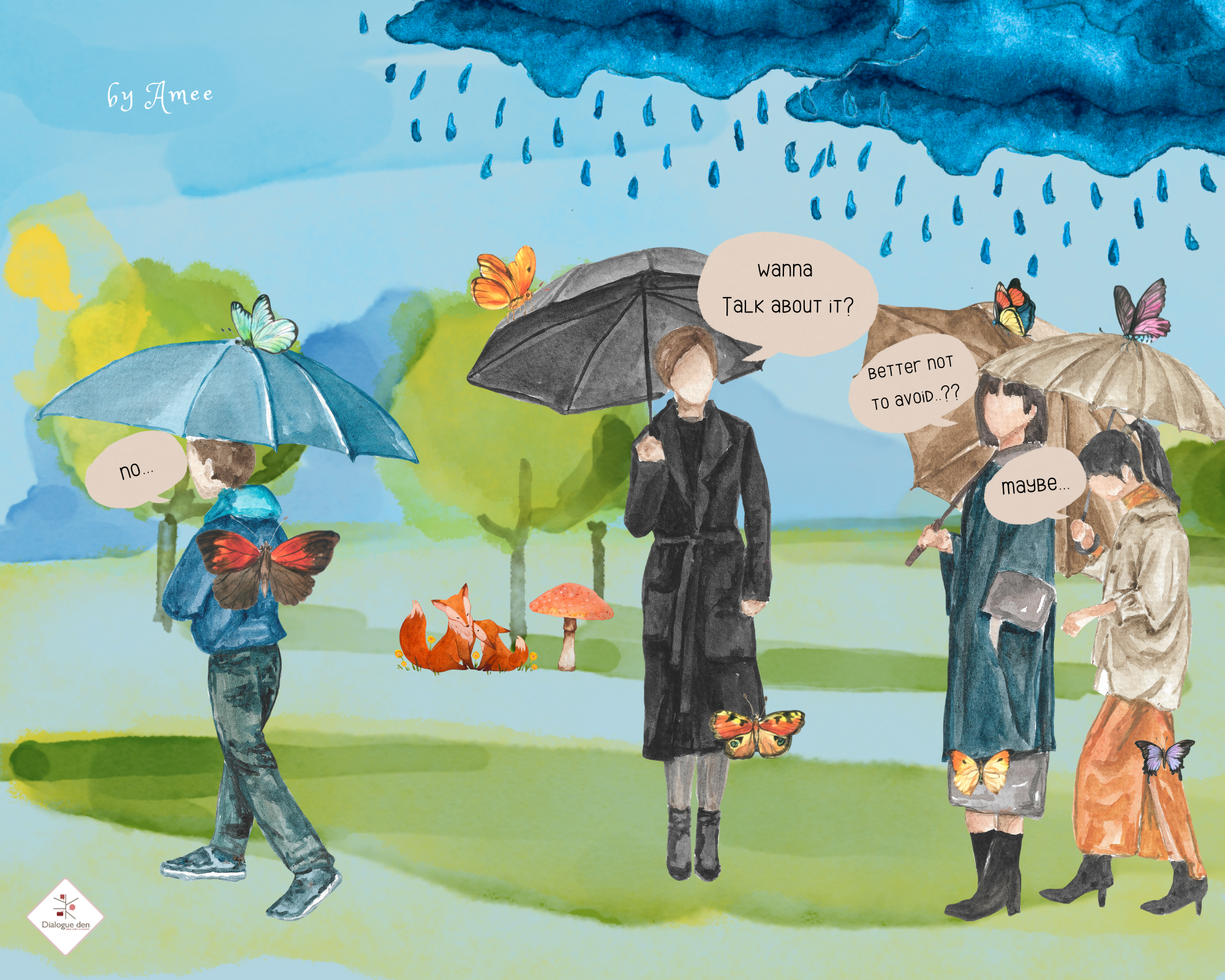
Butterflies!!! What is this post about?
Dear reader, welcome to this reflective exploration into the subtle interplay between nature’s whispers and human behavior amidst conflict.
I write, surrendered to the cool breeze on the balcony of this Bangalore home. A perfect setting where a thinker’s mind can articulate the dreamiest thoughts.
This morning in Bangalore feels tranquil, after the scorching heat of the record-breaking summer finally gives way to the long-awaited downpour. This downpour deserves a pause in the regular routine, a not-to-miss chance to slow down the morning and savor the moment over a cup of masala chai while simply sitting to spot the beautiful tiny butterflies that rise after the fresh downpour, and ………… of course to birth this post!
Amidst the fluttering of butterflies, this piece of writing captures the inspiration intertwined with the delicate balance of life.
Here, we embark on a journey through the tumultuous dance (excited, or confusing feelings) of human behavior amidst conflict, guided by the graceful (smooth, or attracting attention) movements of butterflies. Just as these winged creatures navigate the downpour with a quiet resilience, we’ll explore into the parallels of human behavior in the face of adversity from a conflict situation.

Join me in discovering the wisdom hidden within nature’s whispers, as we ponder the significance of avoidance amidst the storm of conflicts.
Enjoy reading 🙂
Sipping my ginger masala chai this morning, a beautiful thought fluttered into my mind. My mornings are typically quiet, yet rarely slow. When I do have a slower start, I enjoy watching butterflies flit across the flowers, their delicate wings a kaleidoscope of color. As a child, I remember chasing these captivating creatures, mesmerized by their seemingly effortless flight. Entomology, not lawyering or mediation, might have been my calling in another life. Insects and birds spark a deep curiosity in me, and observing their behavior serves as a constant source of inspiration.
Butterflies, in particular, embody a captivating blend of beauty and fragility. It’s no secret that the butterfly’s cocoon stage is often used as a metaphor for perseverance and the power of waiting for something good. However, this post isn’t about that.
Today, I want to explore how a fully grown butterfly handles the rain, and how this behavior can be applied to conflict resolution – with a twist.
Imagine a butterfly during a downpour. On a scale of 0 (least able) to 10 (most able), how well do you think it would withstand the rain? Let’s be lenient and picture a gentle drizzle of Bangalore’s morning, not the Mumbai’s dust storm of yesterday. Here’s the reality: you likely wouldn’t see any butterflies at all. They seek shelter during rain. They are those who don’t risk having their delicate wings washed away. Rain, for a butterfly, is like nightfall – a time to find a safe haven until the sun rises or the rain subsides.
Butterflies rarely survive being caught in the rain. Their nature dictates they avoid it altogether. They don’t fight the rain, they simply find refuge.
Now, let’s bridge this concept to the world of conflict and mediation. What does this avoidance behavior remind you of? As a mediator, I immediately think of avoidant behavior in conflict situations – the tendency to run away and not face the issue.
These avoidant individuals, whom I’ll playfully call “butterflies of the rain,” would rather hide and wait for the pressure of the conflict to dissipate.

They understand the conflict won’t disappear entirely, but by avoiding the immediate pressure, they believe they can escape the situation altogether. This strategy seems simple on the surface, but is it truly effective?
There’s a reason I felt compelled (interestingly compelled) to write about this.
I had an epiphany about my approach to those who exhibit avoidance in conflict, particularly those who avoid mediation altogether. Typically, such behavior frustrates the mediator in me. My mediator instincts kick in – I devour books on techniques, explore various methods, and consult seasoned colleagues, all in an attempt to combat this avoidance. It’s as if I believe I can dictate someone else’s behavior – but I tell you here —- this is a futile effort, bordering on delusion.
In the spirit of Hindu traditions, one might even say it’s a form of being possessed by an external illusionary force! Perhaps I would confirm that every time I tried to control this type of situation, I could have been channeling a particularly stubborn force, a mischievous entity known for causing problems. My determination to “fix” avoidance will soon start to feel less like helpful mediation and more like a one-sided wrestling match with an invisible opponent.
Back to my revelation: perhaps the “avoidant human” simply lacks the capacity to confront conflict head-on, just like a butterfly can’t withstand the rain? If an avoidant person were forcefully pushed beyond their natural limits, the outcome could be disastrous, akin to a butterfly losing its wings. What good is a butterfly without wings?
(I took a good long pause from writing here…, before continuing further…)
Isn’t it remarkable how nature can teach us empathy? Once I grasped the inherent nature of a butterfly – a delicate creature seeking shelter until the storm passes – I began to wonder if the same might be true for “avoidant humans.” Perhaps they, too, have their reasons. The real question then becomes:
What can an ideal mediator do to discover the natural reasons behind avoidance, without judgment or preconceived notions?
And that…..
Haven’t we all experienced avoidance in our own lives? We all have that one aunt or uncle we try to dodge at family gatherings (not one, i’ve quite a few 😀 , most of the times, you will find me avoid the whole lot), or the annoying neighbor whose conversation we actively avoid…
Moving forward, important lessons of the day….
Whenever I encounter someone exhibiting avoidance, I will consider the possibility of underlying reasons, natural limitations, and the need for space.
The goal is to create an environment where the “rain” of conflict can subside, allowing the avoidant person to emerge and engage in a productive dialogue.
While psychology offers valuable tools for identifying and approaching avoidant behavior, sometimes the simplest solution is the most effective? In conflict resolution, empathy is key we say? Then, can we ask “why?” BUT in addition to asking Why —- Can we promise to seek to understand the natural reasons behind the avoidance.
Determine how much time and space will be reasonably needed for this avoidant individual to feel comfortable emerging from hiding?
This, my friends, could be what we call – the essence of empathy!?
So, what’s the takeaway for us, as navigators of conflict and conflict resolving processes?
- Instead of viewing avoidance solely as a roadblock, could we instead consider it a natural response, much like a butterfly seeking shelter?
- By fostering empathy and understanding the reasons behind avoidance, should we develop our ability to create a safe space for open communication and dialogues to flourish?
- The “butterflies of the rain” might just surprise us with their strength and resilience, once they emerge from their hiding place, no?
Let me know what you think. I think, we should let empathy be our guiding light, through which we transform conflict resolution into a haven where all, even the most delicate butterflies, can weather the storm. Well, in nature’s language — we are talking impossible here. Nature must have a reason why butterflies are butterflies, delicate, fragile, not rain-friendly. Perhaps that’s the key. Maybe empathy allows us to create a different kind of shelter, one where even the most conflict-averse can find refuge and not feel pressurised to navigate the storms…?!?!
Ok, but answers to the “How”? You teach me that :).
If you have any advice or resources to share, feel free to send them over to me individually or leave them here in the comment box below!
So, that’s it on the butterflies avoiding rain = humans avoiding conflicts…!?
Thank you for reading 🙂 and contemplating with me, and my thoughts.



Leave a Reply