
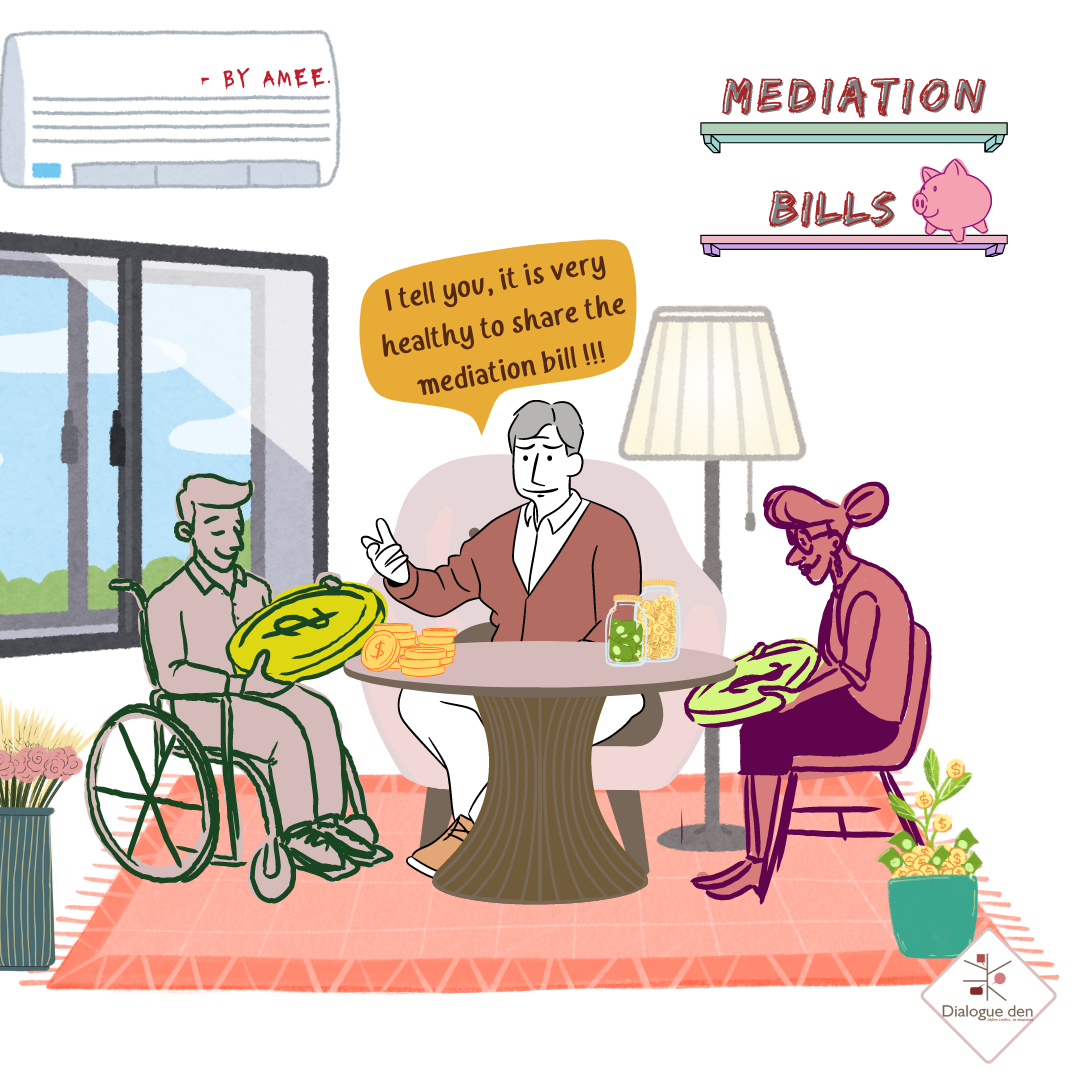
First things first, all of what is written here is/ are just possible situations, and there could be countless customized solutions. This writing is meant to only talk about this point, so we can at least “see” the elephant in the room. We’ll figure out how to address the elephant (as life unfolds)!
(I personally, have assumed that) Nobody knows the correct answer or even the question when it comes to “money” (not wealth, but physical money) because it all depends—on a case-by-case basis, situation-by-situation basis, person-by-person basis, or family-by-family basis, and who knows – what even is the basis.
Second, let’s face it, dealing with conflicts is tough. But what’s tougher? Figuring out who pays for mediation when you’re already at odds!
Mediation can be a lifesaver, offering a peaceful resolution without the drama of a courtroom. But before we dive into the nitty-gritty, and care to talk about how a mediator’s bill is calculated??? Usually, mediators charge either by the hour or a flat fee for a set number of hours. It all depends on the mediator’s style and what the parties agree upon.
Now, imagine you’re in the middle of a heated dispute. How on earth do you decide who pays for what?
Here are a few (three, precisely) ways to handle it:
1. One Party Takes Responsibility for Payment
Sometimes, one person steps up and says, “I got this.” Maybe they have a higher income or just want to speed things up. For instance, in a divorce, the spouse who earns more might offer to pay the whole mediation bill. It could be their way of saying, “Let’s get this done and move on.”
This can also happen in business disputes. Say a big company is having an issue with a smaller supplier. The big company might pay for mediation to keep things fair and maintain a good relationship.
(This is the most tricky one) In an employer-employee conflict, it’s often the employer who takes on the cost of mediation. They might do this to show goodwill and to maintain a positive workplace environment. For example, if an employee has a grievance, the employer might cover the mediation costs to resolve the issue quickly and fairly, showing they value the employee’s concerns.
2. Splitting the Bill Equally
Then there’s the classic 50/50 split. This method screams fairness and shared responsibility and accountability. Think about siblings fighting over an inheritance. If they split the mediation costs evenly, no one feels left out or unfairly treated. It’s simple, clear, and keeps the peace.
In one mediation between a couple, I was amazed to witness them using their “emergency situation savings,” which they were investing in together for any bad days to come! How nice, it would be, if there were more such conscious people taking such conscious decisions! The world would be a little easier to live in, no?
3. Agreeing on a Percentage Split
Sometimes, equal splitting just doesn’t cut it. Maybe one party has more at stake or deeper pockets. In this case, they might agree to a percentage split. For example, in a business conflict, the party with more financial muscle might cover 70% of the cost, leaving the other with 30%. It’s flexible and can be tailored to everyone’s situation.

Well. Do you know of any other ways we could deal with this topic? Please tell. Share your wisdom here with everybody!
Therefore, No matter how you slice it, deciding on who pays for mediation early on is crucial. Whether it’s one person covering the whole bill, everyone splitting it down the middle, or agreeing on a custom percentage, the key is _________________ (who knows what the key is…? 😀 humans have a history of behaving differently when money gets involved… or you want to yell at me with “communication is the key!!”)
Ok, you can yell.
In the end here, I wish to say,…. sharing the cost of mediation not only smooths out the process but also sets a positive, cooperative tone. And remember, when it comes to resolving conflicts, every little bit of cooperation counts! Agree!?
Ok, thank you for reading 🙂






Leave a Reply